




From Engineering to the Legal Profession
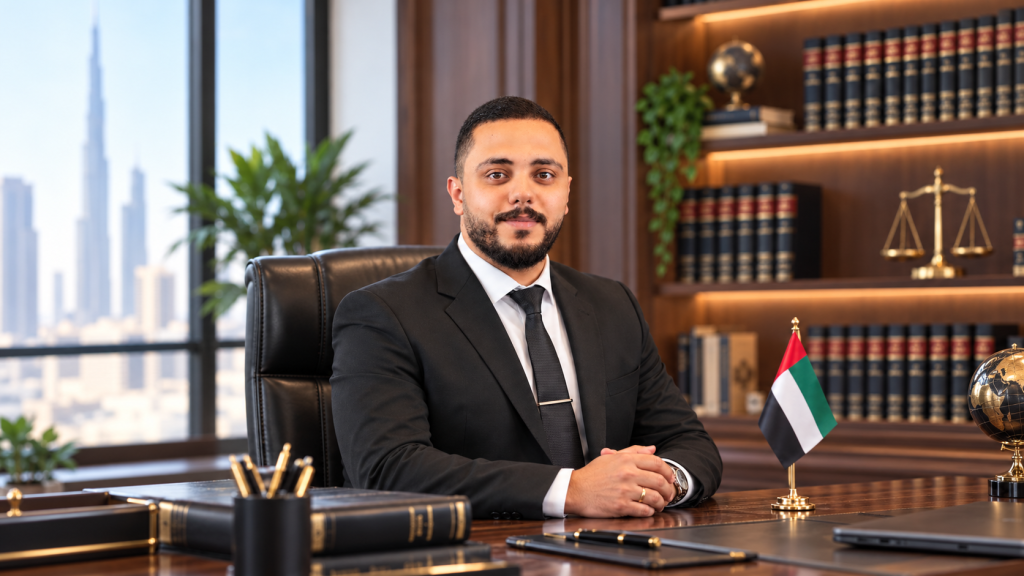
Ahmed El-Farmawy began his academic journey studying engineering. However, growing up in a family with a strong legal background—his father was a judicial advisor in Egypt, and his siblings also pursued legal careers—influenced his decision to change direction.
He went on to study law, graduating with distinction. Despite having the opportunity to join the Public Prosecution, he chose private legal practice to build his professional career.
After moving to the UAE, he expanded his experience across various legal fields before becoming the Manager of Fareed Al Hassan Law Firm and Legal Consultations in Dubai.
AED 5 Million in Compensation: When Success Goes Beyond Numbers
Among the notable cases handled by Fareed Al Hassan Law Firm and Legal Consultations was a compensation claim involving an Indian worker who was awarded AED 5 million, a case that attracted media attention at the time.
Despite the substantial compensation awarded, the significance of the case extends beyond its financial value. It lies in ensuring that the worker received his rightful compensation and in the meaningful impact the outcome had on his life.
This achievement reflects the collective efforts of the firm’s legal team, including thorough case analysis, knowledge sharing, and collaboration to achieve the best possible outcomes for clients.
Real Estate Disputes and International Arbitration Worth Millions
Throughout his career, El-Farmawy has gained experience in real estate, commercial, civil, and family law, as well as compensation claims, legal settlements, and international arbitration.
Among the notable cases he discussed was a real estate dispute valued at AED 45 million, involving villas that were never delivered to their owners following the cancellation of a development project. The case concluded with a favorable judgment for his clients.
He also highlighted a personal injury compensation case worth AED 5 million, legal settlements ranging from AED 2 million to AED 3 million, and other disputes successfully resolved before reaching court.
The firm is currently involved in an international arbitration case, with proceedings still ongoing.
For El-Farmawy, the importance of a case is determined not only by its financial value but also by the rights and interests it represents.
Complex Cases Build Legal Expertise
El-Farmawy believes that handling complex disputes, particularly commercial and financial cases, requires more than a thorough understanding of legal provisions. It demands careful analysis of facts, strong legal reasoning, and the ability to apply the law accurately.
He therefore emphasizes collaborative discussions with his legal team before determining the most appropriate strategy for each case.
He also encourages young lawyers to pursue continuous learning, maintain a daily reading habit, and uphold professional integrity by providing sound legal advice, even when it does not align with a client’s expectations.
Fareed Al Hassan Law Firm: Managing Approximately 100 Active Cases
Based in Dubai, Fareed Al Hassan Law Firm and Legal Consultations has a team of approximately 15 lawyers, legal consultants, and legal assistants, managing around 100 active cases and receiving between 10 and 15 new cases each month.
In his management role, El-Farmawy focuses on effective task allocation, legal work quality, consistent follow-up, and building long-term client relationships.
According to his estimates, the firm’s case success rate ranges between 85% and 90%, while some client relationships have continued for more than five years.
Looking ahead, the firm aims to expand its operations within the UAE and internationally while maintaining the quality of its legal services.
From Paper-Based Management to Digital Transformation
As the number of cases and clients increased, the firm recognized the need to improve file organization, task management, and deadline tracking, particularly given its previous reliance on paper-based processes.
El-Farmawy explains that both he and Fareed Al Hassan were initially hesitant about adopting software solutions. However, challenges related to case follow-ups and reminders encouraged them to explore a dedicated law firm management system.
The firm was introduced to Law Surface through a recommendation from a team member, followed by introductory meetings, including a discussion between Fareed Al Hassan and Ahmed Ibrahim.
After implementing Law Surface, the firm began using the platform to organize cases, assign tasks, and manage client follow-ups. This helped improve daily operations and reduce reliance on manual paperwork.
El-Farmawy acknowledges that the experience changed his previous perception of digital systems and that, in hindsight, he would have preferred to adopt such technology earlier.
Technology and the Future of Legal Practice
El-Farmawy considers digital transformation an important part of modern legal practice, particularly as technology becomes increasingly integrated into institutions and judicial authorities across the UAE.
Based on his experience with Law Surface, he believes specialized legal management systems can help law firms improve organization and operational efficiency, provided they align with the firm’s specific requirements and workflows.
Nevertheless, he emphasizes that technology remains a supporting tool, while legal expertise, analytical skills, and sound professional judgment continue to form the foundation of legal practice.
Experience, Integrity, and Continuous Development
Ahmed El-Farmawy’s professional journey reflects a transition from engineering studies to legal practice and the management of a law firm handling diverse cases and significant financial disputes.
His experience highlights the importance of continuous learning, teamwork, effective management, and the practical use of technology in addressing the evolving challenges of the legal profession.
Ultimately, El-Farmawy maintains that a lawyer’s success is not defined solely by the size or value of the cases handled, but by the ability to protect clients’ interests, uphold professional principles, and build lasting relationships based on trust.